
The Client Relationship Hasn’t Changed. The Conditions for Building It Have.

Client relationships have always been central to business growth. Strong relationships improve retention, create opportunities for organic growth and allow teams to produce better work. They help businesses move beyond individual projects and build partnerships that generate long-term commercial value. That principle has not changed. What has changed is the environment in which those relationships are now being built. Today’s client service teams are operating in a more complex, pressured and fragmented world. There are more stakeholders to manage, more communication channels to monitor, more priorities competing for attention and greater expectations to move quickly without compromising quality, judgement or care. At the same time, technology is changing the rhythm of our working lives. AI, automated communication, scheduling tools, shared platforms and digital workflows are helping teams become more efficient. Used well, they can reduce administrative work, improve visibility and give people more time to focus on higher-value activities. But they cannot build trust for us. Clients still want genuine partners Despite the changes taking place around us, what clients want has remained remarkably consistent. They want someone who understands their business. Someone who recognises the pressures they are facing, anticipates challenges and identifies risks before they become problems. Someone who can contribute beyond the immediate task and provide informed, commercially relevant advice. In other words, clients want a genuine partner, not simply a service provider. The strongest client relationships have always been built on trust, proximity, consistency and the ability to show up with confidence beyond delivery. However, those relationships do not develop automatically. They are created through repeated actions, honest conversations and a genuine commitment to understanding the client’s world. Managing the work is not the same as managing the relationship Many client service professionals have become highly skilled at managing the mechanics of an account. They organise meetings, circulate agendas, share progress updates, respond to emails and ensure deliverables move through the agreed process. All of these things matter. Being responsive, organised and easy to work with remains an important part of excellent client service. But these qualities are now the baseline. They are not, on their own, enough to create a strong client partnership. The real skill lies in understanding what is happening beyond the immediate brief. It means asking better questions, recognising when a relationship is becoming too functional and identifying the concerns that a client may not be expressing directly. It means knowing when to challenge, when to listen and when to create space for a more honest conversation. A team may be delivering the work successfully while the relationship around that work is gradually becoming thinner. The meetings still happen. The projects are completed. The emails are answered. But the deeper connection, trust and commercial understanding that sustain long-term partnerships may be missing. We have fewer opportunities to learn by observing For many years, relationship-building skills were developed through proximity. People learned by watching more experienced colleagues handle difficult conversations, respond to challenging feedback and build credibility with senior clients. They observed how someone read a room, adjusted their communication style or recognised that the issue being discussed was not necessarily the real issue. Learning also happened in the informal moments surrounding the work. It happened over coffee, during the journey back from a meeting or in the quiet conversation afterwards when someone explained what had really happened in the room. The way we work has fundamentally changed, and many of these moments now happen less frequently. Client service professionals may spend much of their time moving between scheduled calls, digital platforms, messages and delivery deadlines. There are fewer natural opportunities to observe how strong relationships are built and fewer informal spaces in which to discuss what went well, what felt uncomfortable and what could have been handled differently. As a result, people may become confident in managing the task before they become confident in managing the relationship. Efficiency is not the same as connection Technology adds another important layer to this challenge. AI and automation can make teams faster. They can support research, simplify reporting, improve workflows and reduce repetitive administrative work. These are meaningful benefits. But efficiency should not be confused with connection. A perfectly written automated email does not replace a thoughtful conversation. A well-managed project platform does not guarantee that a client feels understood. A full calendar of virtual meetings does not necessarily create proximity. The real value of technology lies in what teams do with the time it gives back. If that time is simply filled with more tasks, more messages and more meetings, the relationship does not become stronger. The opportunity is to reinvest that time in the parts of client service that cannot be automated. Thinking more deeply about the client’s business. Preparing better questions. Creating space for meaningful conversations. Spending time together outside the formal project update. Listening properly rather than simply waiting to respond. Relationship building is a commercial skill Relationship building is often described as a soft skill. That description significantly underestimates its commercial importance. The quality of a client relationship affects retention, account growth, reputation and the standard of the work itself. When trust is strong, clients are more likely to share concerns earlier, involve partners in more strategic conversations and provide the context needed to make better decisions. When trust is weak, communication becomes more guarded and transactional. Issues may remain hidden until they become urgent, and opportunities for collaboration or growth may be missed. Relationship-building skills are therefore not separate from commercial performance. They are an essential part of it. Like any other skill, they also require practice. If teams are not given opportunities to develop their presence, judgement, curiosity and confidence, those capabilities can begin to weaken. Better process and better presence Strong client service requires good processes. Clear communication, reliable delivery and consistent account management create the foundations on which trust can be built. But process alone is not enough. Organisations must also help their teams develop the human capabilities that make relationships stronger. This means encouraging
The Client Relationship Has Changed. Has Your Team Changed With It?
The client relationship has changed. Not slightly. Fundamentally. The old transactional model, where an agency received a brief, delivered the work and waited for the next instruction, is no longer enough. In many cases, it is not what clients are looking for anymore. Clients still need strong delivery. That will always matter. But the agency relationships that last, grow and create real value now look much more like genuine partnerships. They are built on trust, proximity, commercial understanding, honest conversations and the ability to think beyond the immediate task. And yet, many teams are still operating from an old playbook. They are managing the work, rather than strengthening the relationship. Waiting for the brief, rather than shaping the conversation. Focusing on what has been delivered, rather than how useful, relevant and commercially valuable that delivery has been to the client. This is where modern client service has changed. Being responsive, organised and pleasant to deal with is important, but it is now the baseline. The real skill is in how client-facing teams show up. Can they build enough trust to have a difficult conversation early?Can they understand what is happening inside the client’s business, not just inside the marketing plan?Can they spot when a relationship is becoming too functional, too distant or too delivery-led?Can they create the kind of connection that makes a client want to involve them earlier in the thinking? These are often described as soft skills, but they are commercial skills. They affect client retention. They affect growth. They affect the quality of the work. They influence whether an agency is seen as a supplier, or as a strategic partner worth keeping close. The challenge is that these skills are not being developed in the same way they once were. For years, people learnt client service through proximity. Sitting next to someone more experienced. Watching how they handled a tense meeting, built rapport, followed up after a difficult conversation, read the room, or knew when to stop talking and listen. A lot of that informal learning has disappeared. Hybrid and remote working have brought huge benefits, but they have also reduced the amount of real-world exposure younger client service teams receive. There are fewer overheard conversations. Fewer journeys back from meetings where someone explains what really happened. Fewer opportunities to see strong relationship-building in motion. Over time, that has an impact. People become more confident in the task than in the room. More comfortable sending the email than having the conversation. More used to managing through tools, decks and calls than through genuine human interaction. This is something agency leaders are noticing. The work is getting done. The meetings are happening. The clients are being managed. But in many cases, the relationship feels thinner than it used to. Less instinctive. Less connected. Less commercially alive. That is not about blaming teams. It is about recognising that the environment has changed, and development needs to change with it. If agencies want stronger client relationships, they need to show their teams what modern client service actually looks like now. Not just how to write a status update or run a meeting, but how to create trust. How to stay close without becoming needy. How to ask better questions. How to build commercial relevance. How to move from service provider to trusted partner. And sometimes, the answer is also very simple. Get out from behind the screen.Set up the coffee.Spend time together without a deck.Ask what is really going on.Listen properly. Because the modern client relationship is not built only in the formal moments. It is built in the space between them. In the conversations where people feel known, understood and supported. In the moments where an agency proves it is not just there to deliver the work, but to help make the thinking, the relationship and the outcomes stronger. The client relationship has changed. The question is whether agencies are helping their teams change with it. If this is something you are seeing inside your own client service team, ARMA helps agencies strengthen the behaviours, confidence and commercial skills that support better client relationships.
Client service performance is not industry-specific
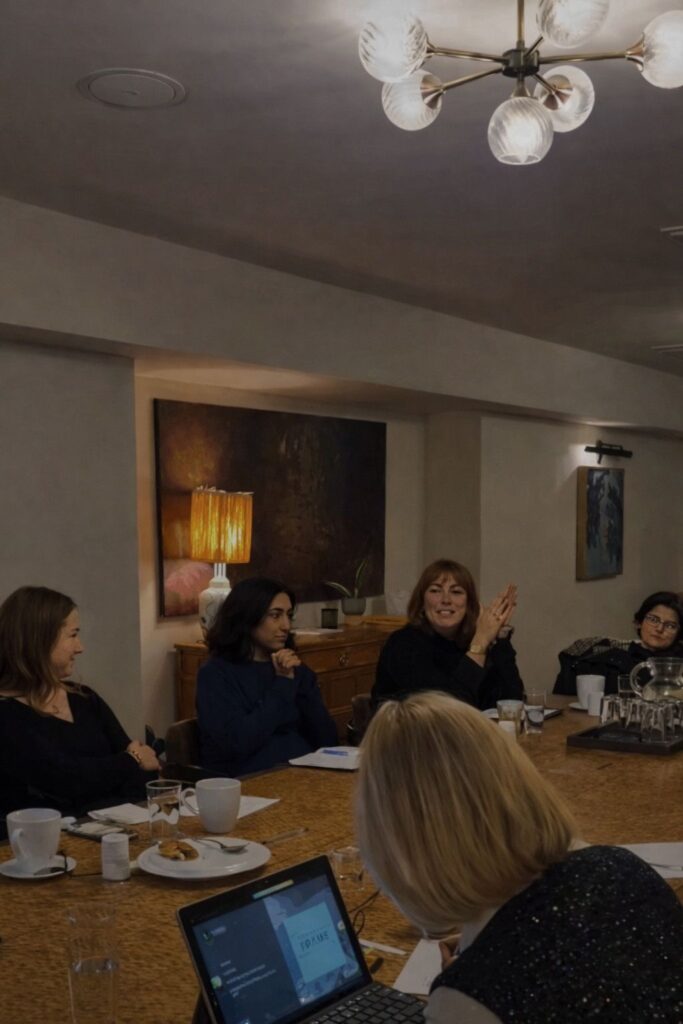
One of the most common assumptions about client service programmes is that they only work within clearly defined sectors. Media is different from music. Professional services are different from creative industries. The logic suggests that each context requires a completely different approach. In practice, this isn’t what we see. ARMA’s recent work with Frame, a collective of music managers operating in a fast-moving, high-pressure environment, is a useful example of why client service performance is fundamentally transferable across industries. Different contexts, familiar pressures Music management brings its own dynamics: intense time pressure, emotional stakes, unpredictable demands and complex client relationships. But when you look beneath the surface, the challenges are strikingly similar to those faced in many other sectors. These are not music-specific challenges. They are client service challenges. Why performance behaviours matter more than sector knowledge ARMA does not focus on teaching people what to do within a particular industry. Instead, our work centres on how people operate within demanding client environments. That includes: These capabilities sit beneath effective client service in any industry. When they are strong, teams perform well regardless of sector. When they are weak, sector expertise alone is rarely enough to compensate. A partner, not a playbook This is why ARMA positions itself as a client service performance partner rather than a sector-specific training provider. Our programmes are grounded in real client environments and designed to work in practice, not theory. They are adaptable to different contexts because they focus on the underlying behaviours that drive sustainable performance — not on scripted responses or generic frameworks. Working with organisations like Frame reinforces a simple truth: industries may differ, but the foundations of effective client service do not. The common denominator Whether in music, media, professional services or beyond, strong client outcomes depend on people who can think clearly, act consistently and perform well under pressure. That is the work ARMA does — across sectors, teams and levels.
From training to measurable behaviour change: what our work with Havas Play reinforced
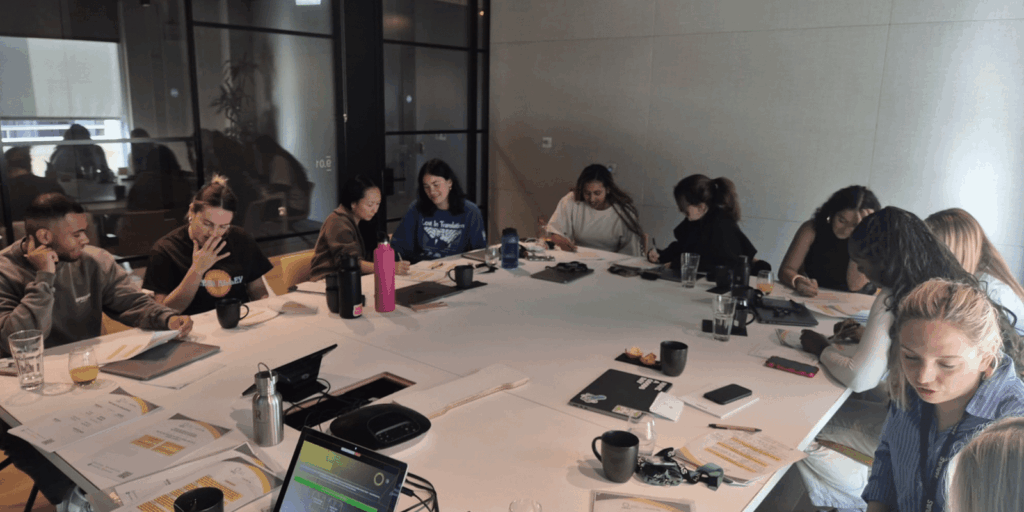
Title: From training to measurable behaviour change: what our work with Havas Play reinforced Subtitle: Retention & Growth Coaching built for real client challenges — and designed to scale Client-facing teams don’t need more theory. They need repeatable behaviours that hold up under pressure: tough conversations, shifting scopes, retention risks, and growth opportunities. That’s exactly what ARMA set out to support through the Retention & Growth Coaching programme delivered with Havas Play. What the testimonial highlights (and why it matters) Ella Deery, L&D Senior Talent Development Partner, captured the heart of the programme: it was credible, grounded in real client challenges, and delivered clear improvements in confidence, capability, and consistency — supported by a robust pre/post measurement approach and a structure that scaled across teams and levels without losing impact. This combination — relevance + coaching + measurement — matters because capability-building is directly connected to retention. LinkedIn Learning has reported that 94% of employees say they would stay longer at a company that invests in their learning and development. Why we design for behaviours (not “information”) In client service, knowledge is rarely the bottleneck. The bottleneck is consistency: Behaviour is where performance becomes visible — and where coaching creates leverage. Measurement: the difference between “well-received” and “working” A key reinforcement from this work: measurement doesn’t need to be complicated, but it must be intentional. To track tangible outcomes, we recommend combining: This is especially important when engagement is declining globally. Gallup reported global engagement fell to 21% in 2024. In that environment, development needs to be practical, credible, and implemented, or it becomes noise. Scalability without losing impact The testimonial also speaks to something many L&D leaders struggle with: scale. Programmes often work brilliantly in one cohort — then dilute when rolled out wider. Designing for scale means: What’s next This week, ARMA and Havas Play are moving into a new workshop phase to elevate the work further — strengthening the behaviours that drive retention, growth, and consistency across client-facing teams. If you’re building L&D for client services and want outcomes you can track (not just “inspire”), ARMA can help you design coaching-led programmes that scale — grounded in real client challenges.